
Peak hair restoration · Insights
Can a hair transplant fix a widow's peak?
A hair transplant for a widow's peak can lower or soften the V-shaped hairline in 2026. Typical graft counts, DHI vs Sapphire FUE and the results timeline.
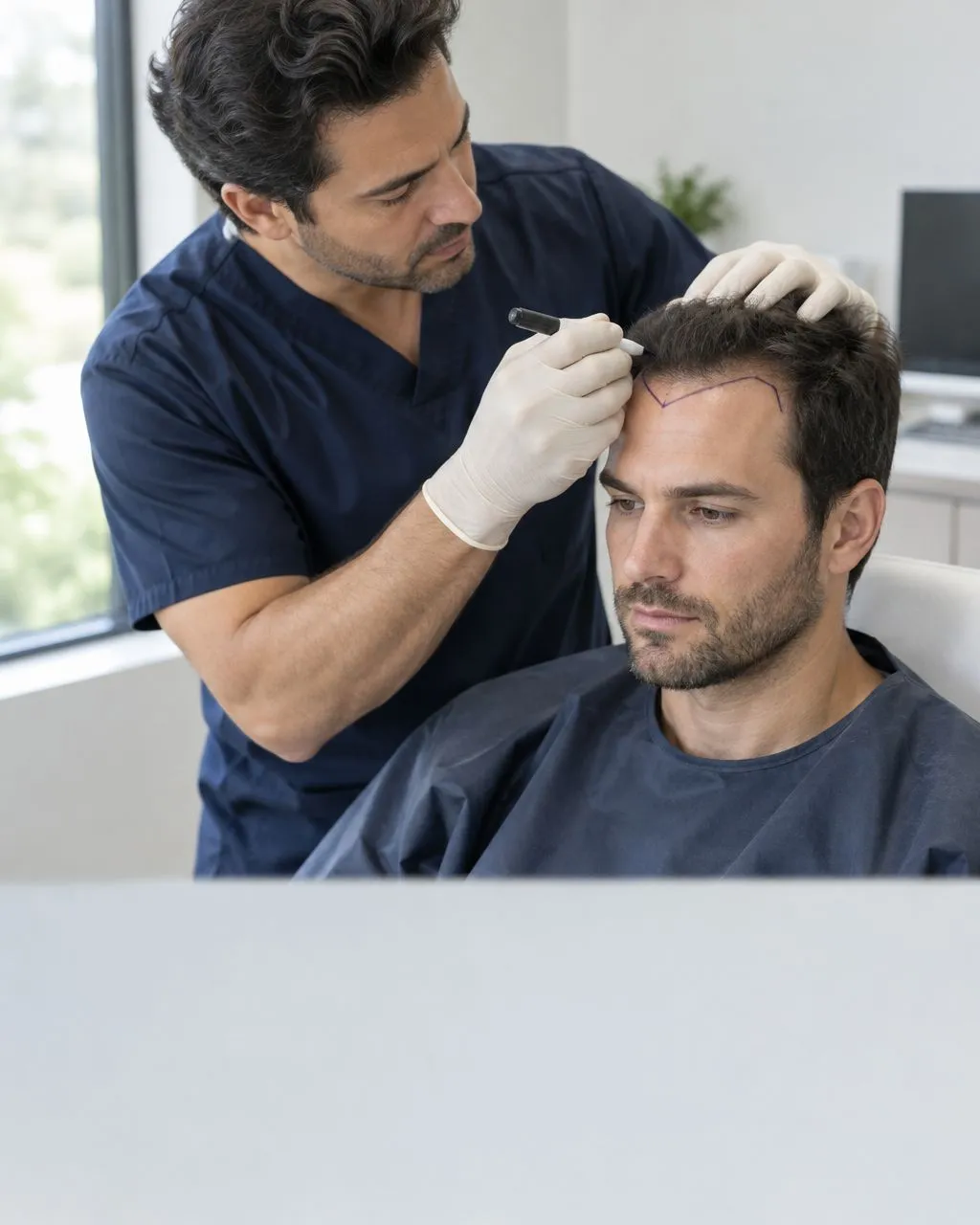
A hair transplant for a widow's peak can reshape the hairline in 2026: the surgeon moves follicles from the back of the scalp into the recession beside the peak or into the peak itself, so the V-shape either softens into a straight line or fills into a rounded one. What surgery cannot do is rewrite genetics — a widow's peak is a normal hairline shape for many people, not hair loss, and whether to keep it or lower it is a design decision first and a medical one second.
- A widow's peak transplant typically uses a few hundred grafts to soften the peak, or 1,500–2,500 for a full hairline rebuild.
- A genetic widow's peak is normal anatomy — surgery is a design choice, not a medical need.
- Sapphire FUE and DHI both work; DHI and unshaven FUE suit subtle corner-lowering.
- New growth starts around months 3–4; the hairline is judged final at 9–12 months.
- Peak Hair Restoration offers free, no-obligation hairline assessments in New York.
Why this matters
The widow's peak is one of the most searched and most misunderstood hairline questions, because it sits on both sides of the surgery decision at once. Some patients want the peak gone; others love it and want the recession around it fixed so the peak looks deliberate instead of stranded. And a third group has a widow's peak plus nothing else wrong — for them, surgery is the wrong tool entirely. Knowing which group you are in is worth more than any graft count estimate, and it is exactly what a proper hairline assessment settles. If you want the design side in depth, the natural hairline design guide covers how surgeons map a hairline to a face.
Can a hair transplant fix a widow's peak in 2026?
Yes, in the situations below — but "fix" means different surgery in each. The transplant moves permanent donor follicles into the hairline, and the V-shape changes because the line changes, not because the peak itself is treated. Here is the scenario-by-scenario answer:
| Your situation | What a transplant does | Typical scope |
|---|---|---|
| A widow's peak you have always had, and you want it gone | Grafts are placed across the peak to straighten the line | A few hundred grafts |
| Recession beside the peak, deepening the M-shape | Grafts fill the temples and corners; the peak is preserved or softened | Commonly around 2,000 grafts when recession is significant |
| Receding hairline with an exaggerated widow's peak | Full hairline rebuild with the peak redesigned into it | Roughly 1,500–2,500 grafts |
| Thinning inside the peak itself, starting recently | Medical assessment first — PRP or medication may come before surgery | Varies by diagnosis |
The last row is the one people skip and should not. Recent, unclear or diffuse loss needs a diagnosis before a hairline plan, because grafting into unstable hair can waste donor capacity that you may need later.
How many grafts does a widow's peak hair transplant need?
It depends on how much of the hairline is moving. Clinics commonly quote around 2,000 grafts for a receding hairline with an exaggerated widow's peak, because the recession beside the peak adds two temple zones to the work. A straight-line correction across the peak itself — no temples involved — sits far lower, usually a few hundred grafts, since the target is one narrow wedge of hairline.
Three things move that number:
- Hair caliber. Coarse, dense donor hair needs fewer grafts to read as full.
- How far the recession has advanced. Corners add graft counts fast.
- Your age and future loss. A 28-year-old's plan must leave donor capacity for later sessions; a 45-year-old's plan can be more definitive.
Graft count is an estimate, not a quote. The surgeon sets it after measuring the donor area at the back and sides — the number you are given at consultation reflects your donor capacity, not a menu.
Which technique works best: Sapphire FUE or DHI?
Both work, and the honest difference is precision of placement, not survival rates you can bank on. Sapphire FUE cuts finer, smoother recipient channels than steel blades, which suits hairline work where incision quality shows. DHI uses an implanter pen to place grafts one at a time through existing hair, which suits patients who want the peak preserved while only the corners are filled — placement without disturbing what is already there. Peak Hair Restoration offers Sapphire FUE, DHI and unshaven FUE at its New York clinic, so the technique conversation happens against your actual hair, not a brochure. If you are weighing the blade question directly, Sapphire FUE versus standard FUE separates what the technique changes from what it does not.
One more point for the design-conscious patient: long-hair and unshaven DHI variants allow a hairline to be lowered without shaving the whole head, which matters when a widow's peak correction is a small, precise job and you want to go back to work without a visible buzz cut.
What the results timeline looks like
A widow's peak correction follows the standard hair transplant clock, and it is slower than most patients expect:
| Milestone | When it happens |
|---|---|
| Surface healing of the graft sites | About 7–14 days |
| Shock-loss shedding of the transplanted hairs | Weeks 3–4 |
| First new growth | Months 3–4 |
| Most of the new hair visible | Months 4–9 |
| Final hairline judged | 9–12 months |
The shedding phase is the point where people panic — the transplanted hairs fall out before the follicles regrow them. That is expected, not failure. The month-by-month picture is covered in the hair transplant recovery timeline.
Why hairline design matters more than graft count
A widow's peak is a chance to make a hairline better or worse, and the difference is design. A straightened hairline that ignores your facial proportions, or a rebuilt peak placed in a rigid triangle, reads as surgery from across the room. A well-designed line does the opposite: it keeps some asymmetry, sets single hairs at the front edge, and places the new hairline where a maturing face wants it — not where the maximum amount of forehead disappears. That is why the natural hairline design principles matter more to this procedure than to almost any other: with a widow's peak, the peak is the design.
When surgery is the wrong first step
Three cases where a transplant is not the answer yet:
- The peak is genetic and nothing is receding. There is no hair loss to treat — the line is your anatomy. Surgery is elective cosmetic redesign, and any clinic that frames it as a correction of a defect is selling, not assessing.
- The thinning is recent or the cause is unclear. Peak's own clinical guidance is that very recent loss, unclear causes or a limited donor area should be assessed first, with PRP or medication as possible early steps. Grafting into undiagnosed loss can strand grafts in areas that keep thinning around them.
- The donor area is limited. Hairline work that exhausts donor capacity now can leave nothing for the crown later. Donor planning outranks hairline ambition.
How much does a widow's peak transplant cost?
Pricing scales with graft count, so a peak-only softening costs a fraction of a full hairline rebuild. New York hair transplant pricing is quoted per graft or per session, and what separates a good quote from a bad one is what is bundled — surgeon time, aftercare, follow-up — not the headline number. The hair transplant cost in NYC guide walks through how to compare written estimates line by line.
One last thing
The most common regret in hairline work is not a bad peak — it is a lowered hairline set too aggressively at 27 that has no room to age at 40. The widow's peak patients who end up happiest are the ones who brought a photo of themselves at 20 and a photo of their father at 50 to the consultation, and asked the surgeon to design between them. Peak Hair Restoration runs free, no-obligation assessments in Midtown Manhattan precisely so that question can be asked before anything is booked.
FAQ
Can a hair transplant fix a widow's peak?
Yes — a transplant can straighten a sharp peak, fill the recession beside it, or rebuild a full hairline with the peak redesigned in. Scope ranges from a few hundred grafts for the peak alone to roughly 1,500–2,500 grafts for a full rebuild.
How many grafts does a widow's peak transplant need?
A peak-only correction usually needs a few hundred grafts. Clinics commonly quote around 2,000 grafts when a receding hairline with an exaggerated widow's peak is rebuilt.
Is a widow's peak a sign of going bald?
No. A widow's peak is a normal genetic hairline shape. What signals pattern loss is recession at the temples and corners beside it — that is what a hairline assessment checks.
Can a widow's peak grow back naturally?
If the peak thinned from temporary shedding or telogen effluvium, it can regrow without surgery. Pattern hair loss does not regrow on its own, which is why a medical assessment comes before any plan.
Is DHI better than FUE for a widow's peak?
DHI suits precise placement around an existing peak or existing hair, while Sapphire FUE suits finer incision channels in hairline work. Both are established — the surgeon's design plan decides the outcome more than the tool.
How long until a widow's peak transplant looks final?
Surface healing takes about 7–14 days, shedding happens around weeks 3–4, new growth starts around months 3–4, and the hairline is judged final at 9–12 months.
Will the transplanted hair fall out after the procedure?
The transplanted hairs typically shed around weeks 3–4 — this shock loss is expected. The follicles stay in place and regrow the hair over the following months.
Can I get a widow's peak transplant without shaving my head?
Yes — long-hair and unshaven DHI variants allow hairline work without a full shave, which suits small, precise corrections where a visible buzz cut is a problem.