
Peak hair restoration · Insights
How painful is a Sapphire FUE hair transplant?
A Sapphire FUE hair transplant hurts far less than most patients expect in 2026: local anesthesia numbs the procedure, and the sorest stretch is 72 hours.
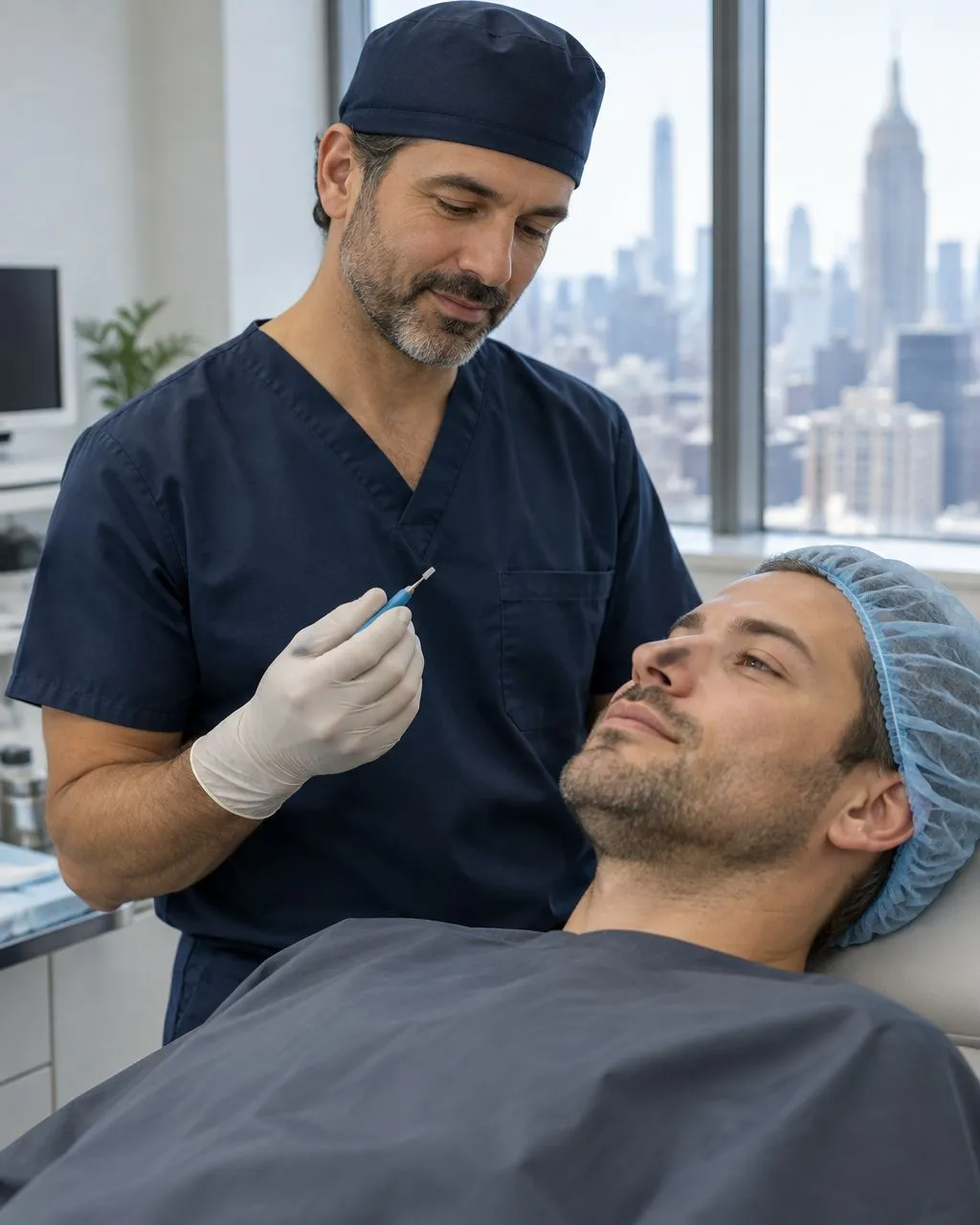
For most patients, a Sapphire FUE hair transplant in 2026 is far less painful than hair surgery's reputation suggests: the procedure runs under local anesthesia, so you feel pressure, tugging and vibration rather than sharp pain, and the soreest stretch of the entire experience is the first two to three days afterward, when the donor area feels tight and tender.
- A Sapphire FUE transplant in 2026 runs on local anesthesia: you feel pressure and pulling, not cutting.
- The sorest window is the first 72 hours; tenderness fades to itching around days 4–10.
- The Sapphire blade changes incision smoothness, not the anesthesia — the surgical plan matters more.
- Most desk workers return to work within a few days; strenuous exercise waits about 2–4 weeks.
- Worsening pain after day 3 is not normal — call your surgical team.
Why this matters
Fear of pain is one of the most common reasons patients put off booking a hair transplant consultation for years. The honest picture is more useful than the fear: which moments actually sting, which days actually ache, and what "sore" means in practice. If you are still weighing whether the Sapphire technique is worth choosing at all, Sapphire FUE compared with standard FUE covers what the blade changes and what it does not.
How painful is a Sapphire FUE hair transplant in 2026?
Short answer: the procedure itself is discomfort, not pain, and the real work of managing soreness happens in the first week after you leave the clinic. Here is the stage-by-stage picture surgeons commonly describe:
| Stage | What you feel | How long it lasts |
|---|---|---|
| Numbing injections | Brief sharp stings, seconds each | 5–10 minutes at the start |
| Extraction and placement | Pressure, tugging, vibration | Most of a 4–8 hour day |
| Evening of surgery | Anesthetic wears off; scalp feels tight | The first night |
| Days 1–3 | Sorest stretch: donor tightness, forehead swelling possible | Peaks around day 2–3 |
| Days 4–10 | Itching and small scabs replace tenderness | Up to about 2 weeks |
| After 2 weeks | Normal sensation for most patients | Regrowth follows over months |
Two things stand out in that table. First, the only genuinely sharp pain of the day is the numbing itself, and it lasts seconds per injection. Second, peak discomfort arrives after the surgery day, which is why your aftercare plan decides how the week feels more than the procedure does.
During the procedure: pressure, not pain
A Sapphire FUE transplant in 2026 is performed under local anesthesia. The surgeon numbs the donor area at the back of your head and the recipient area at the hairline with a series of lidocaine injections; each sting lasts a few seconds. Once the area is numb, sensation in the surgical field drops to pressure and motion. Patients commonly read, watch films or doze through extraction.
You stay awake the whole day. Some clinics offer a mild sedative to take the edge off anxiety, but general anesthesia is rare for FUE work because it adds risk without adding comfort — the scalp nerves block well under local anesthetic. If needles are your main worry, say so at the consultation: a surgeon-led clinic such as Peak Hair Restoration, which performs Sapphire FUE hair transplants in New York, Miami and Istanbul, will walk you through the numbing sequence before surgery day so there are no surprises.
One honest caveat: parts of the scalp are harder to numb deeply than others, and some patients feel occasional dull aches during a long session. You tell the surgical team, they top up the anesthetic, and the ache settles. Pain that is not reported cannot be fixed.
Days 1–3: the sorest window of the week
The anesthetic fades the evening of surgery, and what replaces it is not sharp pain but tightness — a sunburn-like soreness across the donor area and a snug, swollen feeling at the recipient line. Forehead and eyelid swelling is common around days 2–3 and settles on its own; sleeping with your head elevated keeps it down.
Pain in this window is typically manageable with the medication your clinic prescribes, most commonly acetaminophen. Many surgeons ask you to avoid aspirin and ibuprofen in the immediate days because they thin the blood; follow your clinic's written instructions rather than general advice. By day 3, most patients describe the sensation as sore rather than painful.
When it is not normal: pain that keeps climbing after day 3, throbbing with redness or discharge, or fever. Those are signs to call the clinic the same day.
Days 4–10: itching replaces pain
Around day 4 the tenderness fades and itching takes over as the incisions heal and the transplanted hairs approach their normal early shed. It itches because it is healing — and you must not scratch it. The washing routine your clinic gives you handles the scabs gently, and most patients are back at a desk within the first week with the worst behind them.
Strenuous exercise waits longer: most surgeons hold vigorous training, heavy lifting and contact sports for roughly 2–4 weeks, because raised blood pressure and sweat work against healing grafts. Light walking from the first days is encouraged.
Why pain levels vary between patients
Two patients can have the same graft count and very different weeks. The usual drivers:
- Session length and graft count. A large single-day session means more hours of pressure and a bigger healing load than a 1,500-graft hairline.
- Donor characteristics. Hair caliber and scalp laxity change how the extraction feels and heals.
- Anxiety and pain threshold. Tense patients report more discomfort; a clear briefing and mild sedation help.
- Surgeon and team technique. Gentle tissue handling and well-paced sessions are what surgical teams train for.
- Aftercare compliance. Sleeping elevated, not touching the grafts, and following the washing plan shorten the sore window.
- Repair versus first procedure. Reworking scarred tissue involves more planning per graft and can be more tender to heal.
Does the Sapphire blade itself change the pain?
The blade changes the incision, not the anesthesia. Sapphire blades are polished synthetic-sapphire instruments that cut a finer, smoother channel than steel, and clinics that use them — a group that includes Peak Hair Restoration — commonly report less tissue trauma, less post-operative swelling and smoother healing around the recipient sites.
Treat the comfort claims as claims: the mechanism is plausible and widely repeated by clinics, but the published evidence behind the comfort difference is thinner than the marketing around it. What is not in dispute is that the blade has no effect on the numbing injections, which are the only acutely painful moments of the day. If you want the full technique picture, the Sapphire FUE hair transplant guide explains what the blade changes and what it does not.
Bottom line: choose Sapphire for incision quality and natural hairline work, not because it makes the surgery day painless — local anesthesia already does that.
Can you be put to sleep for a Sapphire FUE hair transplant?
You do not need to be. Local anesthesia blocks the scalp nerves completely for surgery, and some clinics add optional light sedation for anxious patients. General anesthesia is rarely used for FUE because it adds risk and a longer recovery without adding comfort.
How long does the numbness last after a Sapphire FUE?
The surgical numbness wears off within hours of leaving the clinic, which is when the tightness of days 1–3 begins. Patches of mild scalp numbness around the donor area can linger for several weeks as small nerves recover — this is common and expected, and sensation typically returns gradually.
When can you sleep normally after a Sapphire FUE?
Most surgeons ask you to sleep with your head elevated — extra pillows or a recliner — for roughly the first week to limit swelling, and to avoid rubbing the grafts against the pillow. Normal sleep positions typically return within one to two weeks, per your clinic's instructions.
One last thing
The hardest part of the week is almost never the pain. It is the discipline: sleeping propped up, washing exactly as instructed, not touching the grafts, and skipping the gym while everyone else carries on. Patients who plan those ten days in advance — time off booked, pillows ready, workouts rescheduled — consistently describe an easier experience than the pain question suggests. Surgeons at clinics such as Peak Hair Restoration offer no-obligation consultations, so you can ask exactly how their numbing sequence and aftercare plan work before committing to anything. And the hair transplant recovery timeline shows what happens month by month after that first week, from shedding to regrowth.
FAQ
How painful is a Sapphire FUE hair transplant in 2026?
It is uncomfortable rather than painful: local anesthesia blocks the scalp during the 4–8 hour procedure, and the soreest stretch is the first 2–3 days of donor tightness afterward. By days 4–10 tenderness has usually given way to itching.
Does the numbing injection hurt?
The lidocaine injections sting for a few seconds each while the scalp is numbed at the start. Once the area is anesthetized, the rest of the day is pressure and motion, not pain.
Will I be awake during a Sapphire FUE transplant?
Yes. The procedure runs under local anesthesia and you stay awake; some clinics offer mild sedation for anxious patients. General anesthesia is rarely used for FUE work.
How long does pain last after Sapphire FUE?
Donor-area soreness typically peaks in the first 2–3 days and fades to itching within about a week. Pain that worsens after day 3, or comes with redness, discharge or fever, is a reason to call your clinic the same day.
Is Sapphire FUE more painful than standard FUE?
No — both use the same local anesthesia, so the surgery day feels similar. The Sapphire blade's claimed advantages sit in smoother channels and healing, not in the numbing.
What painkillers can I take after a Sapphire FUE?
Clinics commonly recommend acetaminophen and often ask you to avoid aspirin and ibuprofen in the immediate days because they thin the blood. Use the medication plan your own clinic gives you in writing.
When can I exercise after a Sapphire FUE transplant?
Light walking is usually fine within days, while vigorous exercise, heavy lifting and contact sports are commonly held for about 2–4 weeks so blood pressure and sweat do not disturb healing grafts. Follow your clinic's dates, not a generic schedule.
What does the donor area feel like afterward?
For the first days it feels tight and sunburn-sore, then itchy as scabs form and fall away. Small patches of reduced sensation can persist for a few weeks while the small nerves recover.