
Peak hair restoration · Insights
Hair Implantation Procedure: Complete Guide 2026
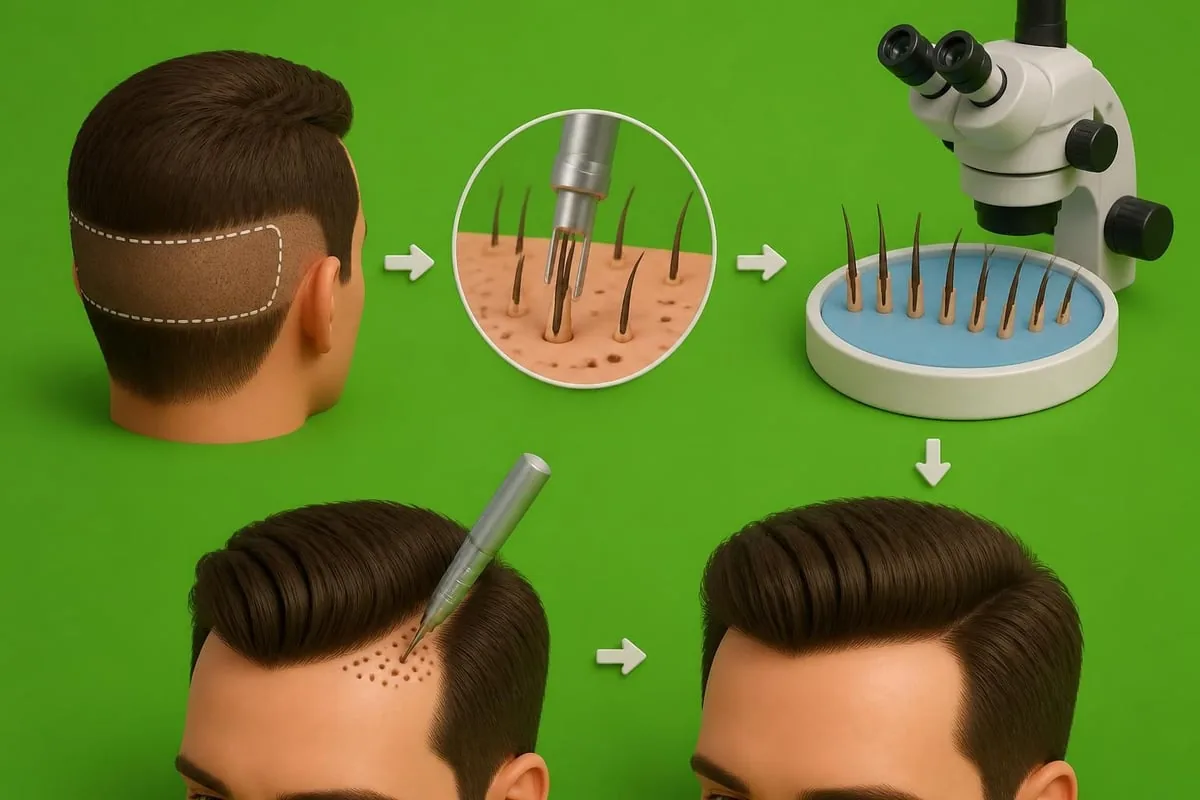
Hair loss affects millions of people worldwide, impacting confidence and self-image across all age groups. A hair implantation procedure can provide long-lasting restoration for suitable patients, but it does not guarantee a particular result or stop future loss of untreated hair. This guide explores the technical aspects, preparation requirements, and recovery expectations of modern hair restoration surgery to help you make an informed decision about your treatment options.
Understanding the Hair Implantation Procedure
The hair implantation procedure relocates healthy hair follicles from donor areas to regions experiencing hair loss or thinning. Transplanted follicles tend to retain characteristics of their donor location, supporting potentially long-lasting growth. Not every graft survives, and neither lifetime growth nor original density can be guaranteed.
Modern hair restoration surgery has evolved significantly over the past two decades. Today's techniques focus on creating natural-looking hairlines while managing scarring and recovery. The American Academy of Dermatology emphasizes that outcomes depend on proper patient selection, surgical expertise, and realistic expectations.
Key Components of the Procedure
The fundamental principle underlying hair implantation procedures involves harvesting follicular units from appropriately assessed donor regions, typically the back and sides of the scalp. These grafts are then implanted into recipient sites where hair loss has occurred.
Critical factors determining success include:
- Donor area quality and density: The available reserve limits achievable coverage and must allow for future needs
- Surgical precision: Appropriate angle, depth, and direction of implantation support natural-looking results
- Graft handling: Careful preservation helps maintain follicle viability during the procedure
- Recipient site preparation: Placement balances the desired distribution with tissue health
Primary Techniques Used in Hair Restoration Surgery
Multiple techniques exist for performing a hair implantation procedure, each offering distinct trade-offs depending on individual patient needs, hair characteristics, and treatment goals.
Follicular Unit Excision (FUE)
FUE involves individual extraction of follicular units using specialized punches. It avoids a linear strip scar but leaves small extraction scars that may be visible with short hairstyles. The FUE technique is a donor-harvesting method rather than a guarantee of any particular appearance or satisfaction level.
Published research, including work in BMC Surgery, should be interpreted in the context of the patients and techniques studied rather than treated as a guarantee for every case. Extensive restoration may require multiple sessions; a smaller area may be addressed more selectively.
Advanced FUE Variations
Sapphire FUE utilizes blades crafted from synthetic sapphire rather than steel for recipient-site preparation. Questions to discuss include:
- How the instrument size fits the grafts and scalp
- How the site depth and direction are planned
- How tissue trauma is minimized during the procedure
- What density is realistic within the donor and recipient limits
The Sapphire FUE hair transplant label does not, by itself, establish faster healing, reduced inflammation, greater density or better growth than another recipient-site instrument.
Direct Hair Implantation (DHI)
DHI commonly describes placement with a sharp implanter that creates a recipient opening and inserts a graft in the same action. Harvesting remains a separate stage, often FUE. The DHI hair transplant label does not guarantee shorter time outside the body, denser growth or a better hairline. Ask the clinician to explain the actual proposed workflow.
| Technique | Scarring | Recovery Time | Candidacy | Session Duration |
|---|---|---|---|---|
| FUE | Small extraction scars | Individual clinical guidance | Requires donor and medical assessment | Depends on graft plan and workflow |
| Sapphire FUE | FUE extraction scars remain | No faster healing established by the label alone | Recipient-site tool chosen for the clinical plan | Depends on graft plan and workflow |
| DHI placement | Harvesting scars and recipient incisions remain | No fixed recovery advantage from the pen alone | Implantation method selected individually | Depends on graft plan and workflow |
Pre-Procedure Preparation and Consultation
Planning for a hair implantation procedure begins long before surgery day. Preparation supports informed consent, medical suitability and a realistic graft plan; it cannot ensure a particular growth outcome.
Initial Assessment
The consultation process typically involves detailed scalp examination, medical history review, and discussion of realistic expectations. The ISHRS virtual-consultation guidance is relevant when arranging a remote assessment. Confirm what still requires an in-person examination before surgery.
Pre-procedure evaluations can include:
- Scalp and donor assessment: Reviews tissue health and, where relevant to strip harvesting, scalp laxity
- Hair caliber analysis: Helps estimate cosmetic coverage per graft
- Donor density calculation: Helps establish usable supply and limitations
- Pattern stability assessment: Reviews progression and the possible need for monitoring or medical management
Medical Clearances and Restrictions
Patients must disclose all medications, supplements, and health conditions during consultation. Certain substances may interfere with healing or increase bleeding risk during the hair implantation procedure.
Discuss an individualized preparation plan:
- Do not discontinue aspirin, prescribed blood thinners or any other medication without agreement from the relevant prescribing clinician and surgical team
- Ask for the team's specific instructions about alcohol and smoking
- Disclose supplements, including vitamin E, fish oil and ginkgo biloba; do not assume a universal stopping schedule
- Discuss management of chronic conditions such as diabetes and hypertension before proceeding
The pre-operative checklist can help organize questions, but the treating team's personalized instructions take priority.
Step-by-Step Procedure Walkthrough
Understanding what happens during a hair implantation procedure helps reduce anxiety and sets appropriate expectations for the surgical experience.
Anesthesia and Comfort Management
Hair restoration surgery commonly uses local anesthesia to numb donor and recipient areas. Most patients remain awake. Any sedation, comfort measures and monitoring should be explained by the treating clinician rather than assumed from a general description.
The NHS provides guidance on what patients should expect regarding anesthesia and pain management during hair transplant procedures. Injections can be uncomfortable. If you feel pain during treatment, tell the clinical team so they can assess it; complete comfort cannot be promised for everyone.
Donor Area Harvesting
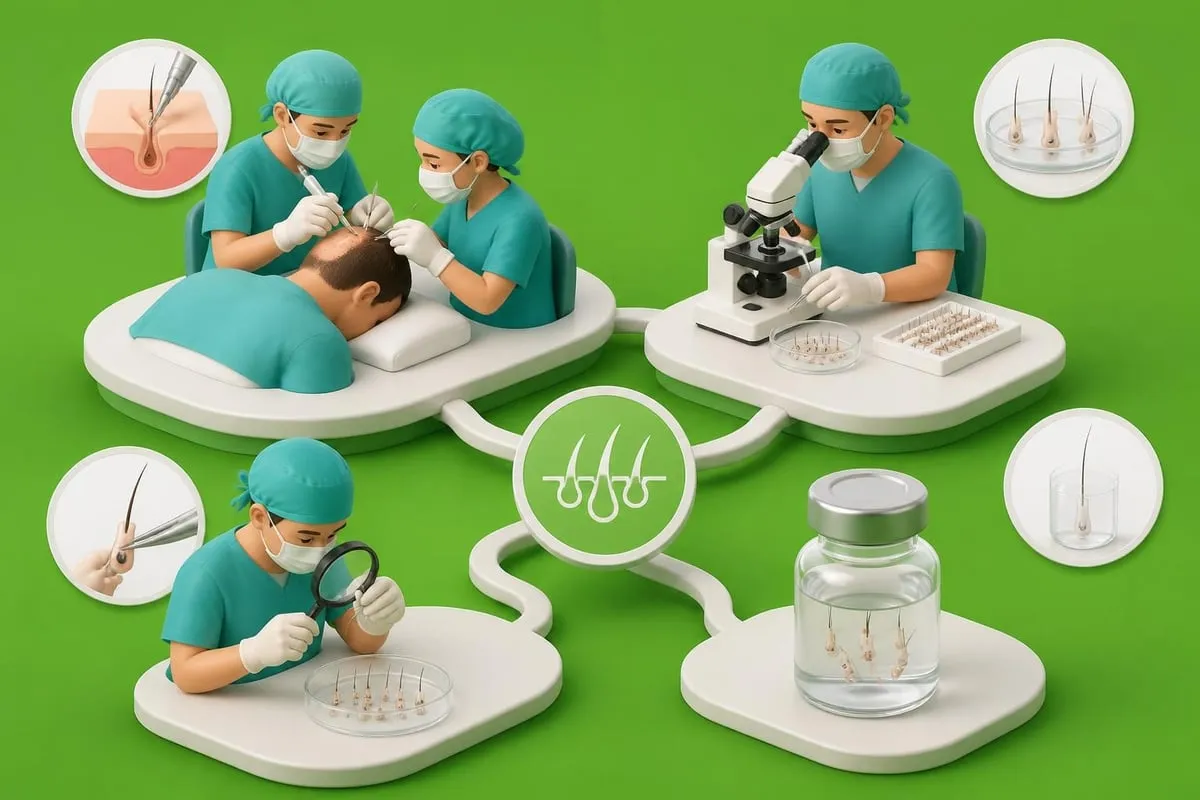
For FUE procedures, the surgeon uses punches selected for the patient's follicular characteristics and treatment plan to extract individual follicular units. The process requires careful planning to avoid overharvesting and preserve options for future procedures where possible.
The clinical team places extracted grafts in appropriate holding solutions. Storage conditions and careful handling matter during this phase. Confirm who performs each surgical step and who is responsible for your care.
Recipient Site Creation and Implantation
The surgeon prepares recipient sites with the selected instrument, considering natural hair direction, angle, and distribution. With sharp implanters, site creation and placement can occur together instead of in separate stages.
Strategic placement considerations:
- Hairline design considers natural recession patterns and facial proportions
- Temple points are planned around the patient's features and goals
- Crown patterns account for the natural whorl
- Transitional zones are designed to avoid an abrupt leading edge
Graft placement follows the agreed workflow and appropriate clinical responsibilities. Single-hair grafts are often used at the leading hairline for softness, while multi-hair units may add coverage behind. Distribution must fit the individual plan.
Peak Hair Restoration
Start with a conversation
Request a free, no-obligation consultation, or message Peak’s coordination team on WhatsApp about scheduling.
Recovery Timeline and Post-Procedure Care
Healing after a hair implantation procedure varies with the procedure and individual factors. General timing is background information, not permission to change your surgeon's aftercare plan.
Immediate Post-Operative Period (Days 1-7)
The first week focuses on protecting newly implanted grafts while monitoring healing. Swelling, tenderness and some minor bleeding can occur. Severe pain, persistent bleeding or unexpected symptoms require prompt contact with the treating clinic.
Care instructions to confirm include:
- Recommended sleeping position and duration
- Avoiding scratching, rubbing or picking the transplanted area
- When and how to wash, using your own team's instructions
- Taking only the medicines prescribed or agreed for your case
The post-operative guide provides background. Written directions from your surgical team should be tailored to your procedure.
Early Healing Phase (Weeks 2-4)
Crusting and visible healing should be reviewed according to your clinical instructions. Return to work depends on duties, physical demands, required headwear and healing. The NHS notes that some patients may need one to two weeks off, but your own readiness must be assessed individually.
| Recovery Milestone | General Timeframe | What to Expect |
|---|---|---|
| Early protection | First two weeks | Follow the treating team's graft-protection instructions |
| Crusting resolves | Varies during early healing | Wash only as instructed; do not pick scabs |
| Transplanted hair sheds | Two to eight weeks, per AAD guidance | Shedding can precede regrowth; it is not a survival-rate measurement |
| New hair appears | Following months | Progress differs between patients |
| Visible result | Six to nine months for many patients, per AAD | Not a universal percentage of final growth |
| Later assessment | Some need twelve months; NHS describes full results at ten to eighteen months | Review progress without assuming guaranteed density |
Long-Term Growth and Maintenance
Understanding the hair growth cycle helps patients maintain realistic expectations during recovery. Transplanted hair shafts may shed before new growth appears. The early appearance is not a reliable prediction of final density.
Growth review should consider:
- Early shedding and changes over the first months
- Gradual emergence of new hair
- Changes in thickness and length over subsequent months
- Comparable photographs and clinical examination
- The treating clinician's assessment if progress is below expectations
Complementary Treatments and Enhancement Options
Some patients discuss adjunctive therapies alongside their hair implantation procedure. These options require their own evidence, risk and cost discussion; they are not automatically necessary for every transplant.
Platelet-Rich Plasma (PRP) Therapy
PRP hair restoration uses a preparation from the patient's own blood, administered through injections. Research such as articles indexed in PubMed Central should be reviewed for the actual protocol, study quality and patients involved. A possible adjunctive benefit is not proof of guaranteed survival or faster growth for every patient.
There is no universal PRP schedule that all transplant patients must follow. Ask the treating clinician whether it is appropriate, what outcome would be measured and what additional fees apply.
Stem Cell Therapy Integration
Stem cell hair therapy covers approaches that should not be assumed equivalent or established transplant aftercare. Ask about the exact product or procedure, evidence, applicable regulatory status and risks. Do not assume that an add-on regenerates donor follicles or improves graft survival.
Medical Management for Non-Transplanted Hair
The treating clinician may recommend medical therapy for ongoing native-hair loss. Finasteride and minoxidil are options used for certain diagnoses, but suitability, contraindications and side effects require individual discussion. Do not start, stop or change medication based on this article.
Selecting the Right Provider for Your Procedure
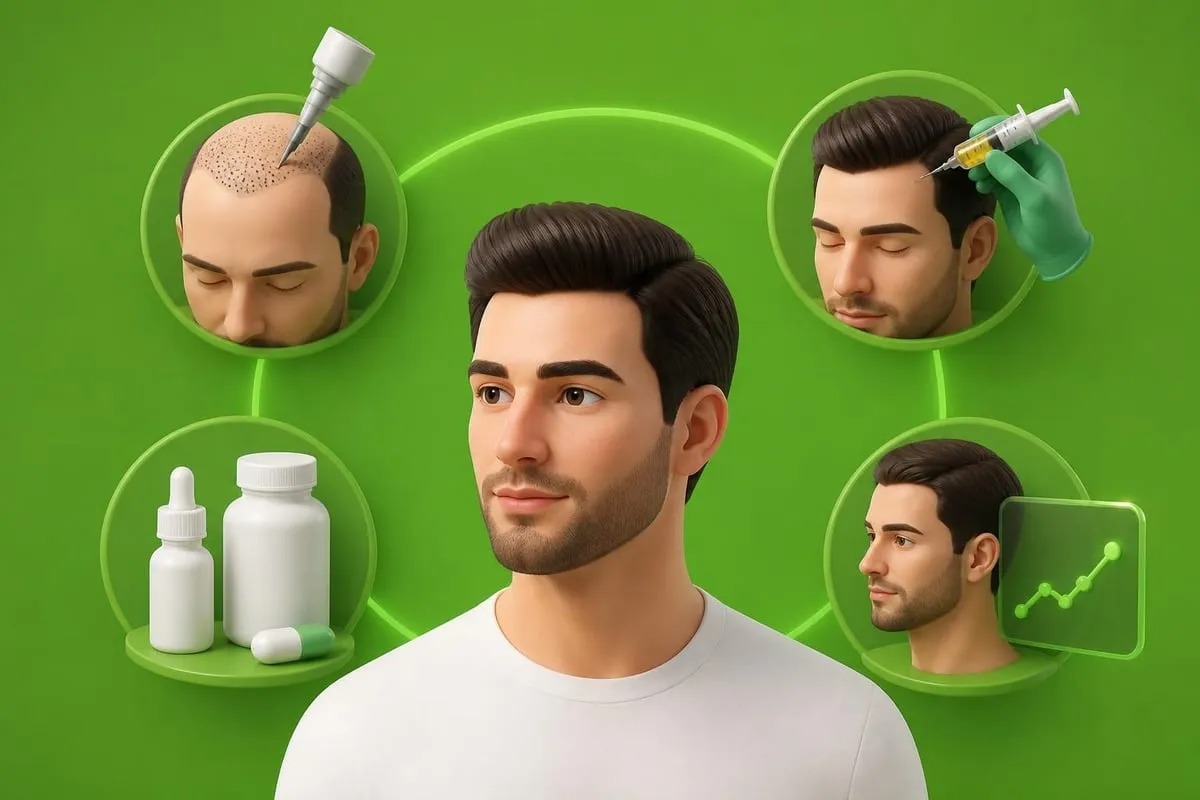
The quality of your hair implantation procedure depends heavily on surgeon expertise, facility standards, and team experience. Choosing a qualified hair transplant surgeon requires careful research and consideration of multiple factors.
Credentials and Experience
Verify the clinician's medical license, relevant training and any claimed specialty certification. Hair restoration also requires procedure-specific experience. A society membership alone is not a license or a guarantee of quality.
Qualifications and evidence to verify:
- Any claimed membership in the International Society of Hair Restoration Surgery (ISHRS)
- Experience specifically in hair transplantation
- Who performs each surgical stage and under whose responsibility
- Documented before-and-after cases relevant to your hair characteristics
- Independent patient accounts, considered alongside clinical evidence
When reading research comparing FUE versus FUT techniques, consider both the harvesting trade-offs and the skill required to perform them. A technique name alone cannot predict a natural result.
Facility Standards and Technology
Hair implantation requires suitable equipment and infection-control arrangements. Ask about the treatment setting and how safety is managed. Appearance and technology alone do not establish clinical quality.
Capabilities to discuss:
- Appropriate magnification for graft preparation
- Controlled graft-holding conditions
- Extraction instruments selected for the clinical plan
- Access to any preoperative tests the clinician requires
Geographic Considerations and Medical Tourism
New York City provides local consultation options, but location alone is not evidence of clinical quality. Compare the proposed care and hair transplant costs in NYC alongside the responsible clinician and follow-up arrangements.
Some patients explore international options, including Turkish clinics. Understanding the cost-benefit considerations of Turkey procedures helps inform a comparison. Confirm who would assess unexpected symptoms after you return home.
Realistic Expectations and Potential Limitations
Every hair implantation procedure has limitations based on available donor supply, recipient area characteristics, and individual healing responses. Setting appropriate expectations supports informed consent without promising satisfaction.
Donor Area Constraints
Usable donor supply is finite and varies significantly. There is no universal lifetime graft allowance that can be safely assigned before examination. Extensive baldness may require strategic prioritization, staged treatment or acceptance of limited coverage.
Donor limitations affect:
- Total achievable cosmetic density, without a universal percentage target
- Whether additional sessions are feasible
- Ability to address multiple areas such as scalp, beard or eyebrows
- The reserve available if loss progresses
Individual Variation in Results
Hair characteristics and healing responses create variation even when techniques are similar. Coarser or wavier hair can influence visual coverage differently from finer, straighter hair. Ask how your characteristics affect the proposed result.
| Factor | Impact on Results | Planning Consideration |
|---|---|---|
| Hair caliber | Thickness affects visual coverage | Allocate grafts around agreed priorities |
| Hair color contrast | Scalp contrast affects perceived density | Discuss realistic coverage |
| Scalp laxity | Relevant particularly to strip harvesting | Clinical examination; exercises only if specifically instructed |
| Age and progression | Native hair may continue thinning | Conservative long-term hairline planning |
Managing Ongoing Hair Loss
The hair implantation procedure addresses current areas of loss but does not prevent future loss in untreated areas. Patients in earlier stages should discuss how progression could change the appearance around transplanted hair.
A long-term plan can include monitoring, appropriate medical treatment and possible future surgery where suitable. None is automatically necessary or sufficient for every patient.
Cost Considerations and Financial Planning
Hair restoration represents a financial investment, with costs varying by the proposed procedure and care arrangements. Understanding pricing structures helps you compare plans and ask about separate expenses.
Pricing Models and Factors
Clinics may charge per-graft rates or flat session fees. Hair transplant costs in NYC should be confirmed in a current written quote after assessment; an unsourced range is not Peak's pricing.
Cost determinants to clarify include:
- The individualized graft plan
- The proposed harvesting and placement methods, without assuming a fixed DHI surcharge
- The treating clinical team
- Facility arrangements and location
- Which medications, reviews or optional treatments are included
Value Assessment Beyond Price
A low or high price does not prove clinical quality. Inappropriate planning can produce an unsatisfactory result, waste donor grafts and make later correction more difficult. Compare the plan and care arrangements, not only the advertised fee.
Value considerations:
- Documented outcomes relevant to your situation, not guaranteed percentages
- A realistic explanation of expected appearance
- Donor preservation and possible scar visibility with your hairstyle
- Clear clinical follow-up and a pathway for unexpected symptoms
Ask for time to review the proposal, the responsible clinician's credentials and the limitations before deciding. Price alone should not determine whether surgery is appropriate.
The hair implantation procedure can offer lasting restoration for suitable patients. Careful preparation, qualified clinical care and realistic expectations matter throughout the process. Peak Hair Restoration coordinates consultations in Midtown Manhattan. Licensed clinicians at the treating medical practice evaluate suitability and make treatment decisions. Request a consultation to understand your options; individual results vary and are not guaranteed.