Sapphire FUE
Uses a synthetic sapphire blade to prepare the openings for graft placement. Ask how the blade size and site design are selected for your grafts and scalp.
Sapphire FUE in Midtown Manhattan, planned around your hairline, donor supply and future thinning. Understand the proposed coverage, recovery and follow-up before deciding whether a transplant is right for you.

A local hair restoration plan starts with your diagnosis, not a preset package. These are the points to clarify before choosing a procedure date.
Individual follicular-unit harvesting, with sapphire blades used to prepare recipient sites.
Determined by your donor supply, treatment area and long-term plan. A graft can contain more than one hair.
Depends on the proposed graft plan and clinical workflow. Confirm the expected time and whether staging is recommended.
FUE commonly uses local anesthesia. Ask about scalp preparation, shaving and the pain-management plan.
Allow for visible healing and graft protection. Your clinician sets return-to-work and exercise guidance for your situation.
In-person or online consultation, followed by an individualized plan and written quote before you commit.
Sapphire FUE is a type of FUE hair transplant where individual follicles are taken from your donor area and placed into thinning areas through tiny recipient sites made with a sapphire blade. It is one of the Turkish hair transplant techniques Peak offers at our Midtown Manhattan clinic, so New York patients don't need to fly abroad for it.
The sapphire blade is used for recipient-site preparation, not to extract follicles. The size, depth, angle and direction of those sites are part of planning how transplanted hair will sit and grow. The tool does not create new donor hair.
Every Sapphire FUE plan starts with an assessment of your hair loss and donor area by a licensed clinician at the treating medical practice. Peak coordinates your consultation; clinical decisions belong to your treating clinician. Individual results vary.
Your hairline is drawn around your face, age and donor capacity, and you approve it before anything begins.
Individual follicular units are harvested from the donor area, usually the back and sides of the scalp.
Fine recipient sites are made with a sapphire blade, following the angle and direction of your natural hair.
Grafts are placed into the recipient sites to build density and a natural-looking hairline.
You go home with written instructions. Peak's post-op guide walks you through the first days and months.
Shedding is normal in the first weeks. New growth usually becomes visible over the following months.
Both are instruments for preparing recipient sites. Neither blade material, by itself, establishes a better outcome for your hair loss.
Uses a synthetic sapphire blade to prepare the openings for graft placement. Ask how the blade size and site design are selected for your grafts and scalp.
Uses a steel instrument for recipient-site preparation. Donor assessment, harvesting, graft handling and careful placement remain essential.
The clinician's plan, the direction and distribution of grafts, donor preservation and aftercare. A label cannot promise greater density or faster healing.
DHI generally describes placement using an implanter; FUE describes harvesting. Some implantation workflows use prepared recipient sites and others create an opening during placement. Ask your clinician to explain the proposed method instead of assuming one name is always better.
ICE FUE describes graft handling, while Mega Session FUE describes a larger graft plan. These terms can overlap with other parts of a treatment.
Sapphire FUE may suit men and women with pattern hair loss who have enough healthy donor hair. Peak treats straight, wavy, curly and Afro-textured hair, and also offers beard and eyebrow restoration.
It may not be the right first step if your hair loss is very recent, its cause is unclear, or your donor area is limited. In those cases your clinician may suggest PRP or other options first.
Compare all FUE techniques →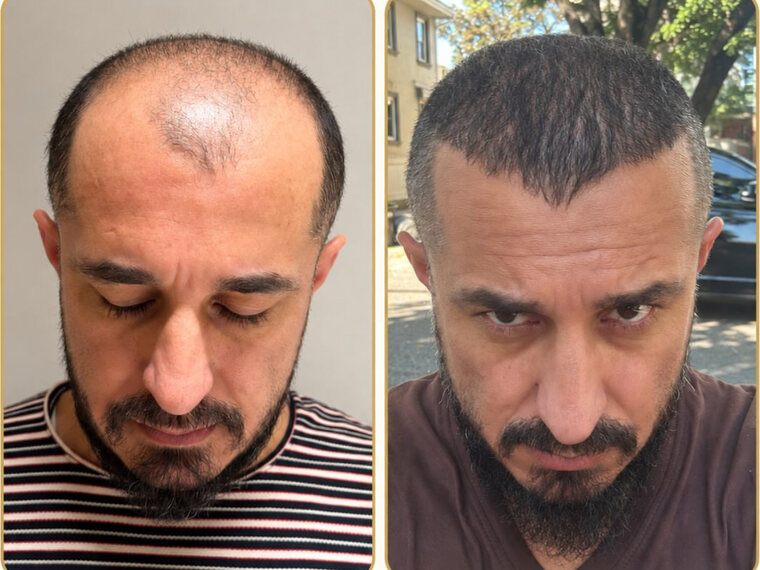
One patient's Sapphire FUE result, not a prediction of yours.
View more patient results →Many New Yorkers travel to Istanbul for Sapphire FUE. Peak offers it in Midtown Manhattan at 240 W 37th St, 5th Floor, with local follow-up, so you can see the same team throughout recovery. Before booking, confirm the treating clinician, procedure arrangements and follow-up pathway.
Your Manhattan Sapphire FUE price is provided after an individual assessment. Request a written quote that explains the recommended treatment, proposed graft range and follow-up arrangements, so you can understand the total before deciding.
The proposed treatment area, graft range, complexity of previous surgery and procedure arrangements all need to be considered. Ask how your plan balances cosmetic coverage with the donor hair available for the future.
A lower cost per graft is not automatically better value if the proposed extraction exceeds your needs or leaves too little donor supply.
Explore NYC hair transplant cost guidance or request your personalized assessment.
Sapphire describes the recipient-site blade, not a separate healing timetable. Protecting your grafts, preserving donor hair and planning for future thinning matter more than a promise of a fast result.
Tenderness, swelling and small crusts may occur. The NHS advises particular care with new grafts in the first two weeks. Confirm your wash instructions, work plans, exercise and headwear restrictions with your own surgeon.
The AAD describes transplanted hairs shedding two to eight weeks after surgery. This can temporarily make the area look thinner. Follow-up helps distinguish expected change from a problem; contact the treating team for unexpected symptoms.
Many patients see results at six to nine months, while some take twelve months, according to the AAD. A photograph is one moment in an individual's recovery, not a promise of your density or final result.
FUE leaves small donor scars even though it avoids a linear strip scar. Bleeding, infection, anesthetic reactions, poor growth and an appearance that does not meet expectations are possible. A sapphire blade does not remove those risks. Severe pain or unexpected symptoms warrant prompt contact with the treating clinic.
Ask for the proposed graft range, the areas to cover, who performs each clinical step, follow-up arrangements and the full procedure price. Optional treatments and financing should be explained separately. A large graft number is appropriate only if your assessed donor capacity supports it.
General medical sources: AAD hair transplant guidance and NHS recovery and risks. Your treating clinician's written instructions take priority.
Share your medical history, previous hair procedures, allergies and a complete list of medicines and supplements. Discuss smoking, alcohol, scalp symptoms and any planned travel with the treating team.
Do not stop prescribed medicines or change a hair-loss treatment on the basis of a general webpage. Your clinician should provide instructions specific to your health and procedure.
Use the pre-op checklist →Follow your surgeon's written instructions for washing, sleeping, headwear, exercise and protecting the transplanted area. Confirm the first review and how to contact the treating clinic if you have a concern.
Contact your treating clinic promptly for severe pain or unexpected symptoms. A generic recovery calendar is not a substitute for personal medical advice.
Read the post-op guide →No. In Sapphire FUE, sapphire describes the recipient-site blade. Follicular units are harvested separately using FUE instruments.
Shaving is a separate planning decision. Ask which donor and recipient areas would be trimmed or left long, and whether the proposed approach suits your graft plan.
It may be, depending on the diagnosis and stability of the donor area. Diffuse thinning or a scalp condition can change the recommendation, so assessment comes before choosing a technique.
Transplanted hair can provide long-lasting restoration, but an outcome is not guaranteed. Untreated native hair can continue to thin, and your clinician may discuss medical management and future planning.
FUE leaves small extraction scars. Sapphire recipient-site blades do not make the procedure scar-free or remove surgical risks.
Sapphire FUE is a follicular unit extraction (FUE) hair transplant in which the tiny recipient sites for your grafts are made with a sapphire blade instead of a steel one. Follicles are still harvested one by one from your donor area and placed into thinning areas.
The sapphire blade is one part of the procedure. It can create very fine, precise incisions, but the blade alone does not guarantee a better result. Diagnosis, donor planning, hairline design and graft handling matter just as much.
They describe different steps. Sapphire refers to the blade used to open recipient sites; DHI refers to placing grafts with an implanter pen. Your clinician will explain which fits your hair and goals.
The appropriate graft count follows an assessment of your donor supply and treatment area. There is no single safe maximum for everyone; a larger or staged session needs its own clinical justification.
Your clinician will tell you when you can return to work and exercise. Transplanted hairs commonly shed 2–8 weeks after surgery, and many people see results in 6–9 months, with some taking 12 months, according to the American Academy of Dermatology.
It depends mainly on your graft count and what is included. See our NYC hair transplant cost guide. Request a written quote after your free assessment, including the proposed treatment and aftercare. Ask separately about current financing terms and eligibility.
240 W 37th St, 5th Floor, New York, NY 10018, in Midtown Manhattan near Penn Station, Times Square and the Garment District. Call (917) 532-2001.
Tell us what you have noticed and what you hope to change. We will explain your options and total cost before you commit to anything.
Request a free consultationThe distinction is recipient-site preparation: the small openings into which grafts are placed are made using a sapphire blade. The donor area still requires individual follicular-unit harvesting. Grafts still need careful handling, a planned distribution and appropriate placement. The blade does not create additional donor follicles or make an unsuitable patient suitable for surgery.
When comparing Sapphire FUE with steel-blade FUE, ask how the clinician chooses the site size, depth and direction for your grafts. A technique name alone cannot establish better growth, less discomfort or a shorter recovery. Ask for evidence relevant to the claim being made and a clear explanation of individual risks. Clinical planning should remain understandable even if you remove the word sapphire from the quote.
FUE describes donor harvesting. DHI generally describes placement with an implanter. Sapphire describes a recipient-site instrument. These labels do not all describe the same surgical step, so a simple ranking from best to worst is misleading. Some implanters place grafts into prepared sites; others make an incision during placement. Your clinician should explain the actual proposed workflow rather than relying on a label.
Explore the DHI hair transplant guide for placement questions and the FUE techniques overview for harvesting, shaving and session-size terminology. The important question is not which name sounds newer, but how the plan protects your donor hair and addresses your goals.
A receding hairline, thinning temples and a widening crown raise different questions. Your Sapphire FUE assessment should connect the area you want to improve with the donor hair available—not treat every pattern of loss as the same procedure.
Frontal restoration considers the shape of your face, existing hair and likely future recession. Ask how the first rows will transition into the hair behind them and whether filling the temples fits your long-term donor plan.
Restoration between the hairline and crown needs a careful review of the hair already present. Discuss how grafts would be distributed and the possibility of temporary shedding around the treated area.
The crown's swirl and surface area can place substantial demands on donor supply. Ask whether treating the crown now, later or more conservatively makes the most sense alongside frontal coverage.
A natural-looking hair transplant in Manhattan starts with a design that suits the individual. Hairline height, subtle transitions, growth direction and the distribution of follicles all contribute to appearance. Your existing hair thickness, curl and contrast with the scalp also influence how full the result looks.
For patients considering hairline lowering, a lower outline uses donor hair that may be needed elsewhere later. Bring photographs of your own previous hairline and explain your priorities, but leave room for a clinician to recommend a more conservative position. The aim is a sustainable change rather than recreating another person's photograph.
Ask to review the proposed outline and understand what it can realistically achieve before consenting to surgery. A sapphire blade is a tool within that plan, not a guarantee of a particular hairline or density.
When comparing FUE hair transplant options in NYC, make sure each quote distinguishes grafts from hairs. A follicular unit may contain more than one hair. The number of grafts does not, by itself, tell you how dense the finished result will look or how large an area can be covered.
Ask for a proposed distribution across the hairline, frontal scalp, mid-scalp and crown. Your clinician should explain which areas take priority, what improvement is realistic and whether any area is likely to remain visibly thin. This makes a graft estimate more useful than a single headline number.
FUE relocates follicles; it does not replenish the donor area. Assessment should consider the appearance of the back and sides after extraction as well as coverage at the front. Existing donor thinning and previous surgery can limit what is appropriate.
If a larger procedure is discussed, ask why a single session is preferable to staged treatment in your case. Our Mega Session FUE page explains the planning questions behind a larger graft session. The safe plan remains individual.
People seeking hair restoration in New York City have different diagnoses, hair characteristics and treatment histories. Establishing the cause of loss comes before choosing Sapphire FUE.
Discuss the pace of recession, family history and any treatment already used. Early or rapidly changing loss may call for monitoring or medical management before committing donor follicles to surgery.
A clinician needs to distinguish a transplantable pattern from diffuse thinning or another cause of shedding. A stable donor area matters; a desired no-shave appearance does not establish surgical suitability.
Hair characteristics need to be considered during assessment and extraction planning. Ask about experience with cases relevant to your hair type. Explore our Afro-textured hair transplant information before your consultation.
If you have already had hair restoration surgery, bring your procedure dates, any graft records and earlier photographs. Remaining donor supply, scars and the position of the existing hairline can change the recommendation. Further surgery should not be assumed to be feasible simply because one area still looks thin.
Explain whether your concern is density, hairline shape, visible donor thinning or continuing loss of native hair. These are different problems and may require different next steps. An assessment can clarify the options without promising that every previous result can be corrected.
For people comparing a hair transplant in Manhattan with treatment farther away, the practical question is how care will work before and after surgery. Confirm where your assessment, procedure and postoperative reviews will take place, and which clinician is responsible for your treatment.
If you commute from Brooklyn, Queens, the Bronx, Staten Island or outside NYC, ask which appointments require an in-person visit. Plan around clinical instructions rather than assuming you can return immediately to a regular commute, gym routine or job requiring headwear.
A Sapphire FUE procedure in New York and an overseas package may include different services. Compare the treating clinician, procedure plan, follow-up access and total arrangements—not just an advertised starting price. Travel and accommodation are separate considerations unless your written quote explicitly includes them.
Ask how unexpected symptoms would be assessed after you return home and who would provide in-person care if needed. Choosing treatment locally does not remove surgical risks, but it allows you to discuss the practical pathway for attending reviews before committing.
For current appointment arrangements, use our New York hair transplant consultation page or call (917) 532-2001. Confirm your appointment address and clinician when scheduling.
When reviewing hair transplant results, ask about the patient's initial pattern of loss, hair characteristics, treatment areas and time since surgery. A frontal photograph cannot show every detail of crown coverage or the donor area. Similar lighting, hair length and styling make comparisons more informative.
Request examples relevant to your own concerns and discuss what the images do not establish. Another patient's outcome is not a prediction of your growth, density or recovery. Our hair graft before-and-after guide provides further context for reviewing progress.
Early photographs show healing, not a final result. Transplanted hair can shed before regrowth, and appearance changes over the following months. Follow the review schedule agreed with your treating clinician rather than judging success against a social-media milestone.
Keep your own photographs consistent and raise concerns through the clinic's follow-up pathway. If growth does not match expectations, a clinical review is more useful than assuming a particular instrument or graft number explains the difference.
A productive hair restoration consultation leaves you with a diagnosis or assessment pathway, realistic priorities and a clear understanding of the proposed care. You should not need to choose a procedure name before that discussion.
Prepare a timeline of your hair loss, previous treatments and surgery, medicines, supplements and relevant health conditions. Explain what has changed recently and the areas you most want to improve.
Ask who assesses your donor area, designs the hairline, performs each surgical step and reviews healing. Confirm the treating medical practice and how to contact the clinical team after treatment.
Request the treatment areas, proposed graft range, anticipated limitations, procedure arrangements, price inclusions and follow-up pathway. Ask about alternatives, including waiting or non-surgical management where appropriate.
Ready to discuss Sapphire FUE hair restoration in Manhattan? Request a free, no-obligation consultation. Peak coordinates the appointment; licensed clinicians at the treating medical practice determine medical suitability and treatment.
A proposed hairline should be considered alongside your features, existing hair, age and likely future thinning. Lowering it further can require more donor hair, with consequences for later procedures. Ask to see the outline from different angles and discuss the transition from the first hairs into the denser area behind them. Your preferences matter, but so does the clinician's explanation of what is sustainable.
Temples and a widow's peak deserve a specific design conversation rather than automatic removal or filling. Bring photographs that show your own earlier hairline if available. Reference images can help explain your goals, but another person's hairline cannot establish the right design for your donor supply. Read our natural hairline design article for the questions to ask.
The crown can involve a broad area and changing hair directions around a swirl. Restoring it competes for the same finite donor supply as the frontal hairline. Ask whether a staged plan, more conservative coverage or treatment of existing thinning hair should be considered. A large session is not automatically the best long-term plan.
Request a written distribution of grafts across the proposed areas and an explanation of what may remain visible afterward. Hair caliber, curl and the contrast between hair and scalp affect the appearance of fullness. Neither a graft count nor the blade material guarantees native density. For curly hair assessment, see the Afro-textured hair treatment page.
Peak's New York clinic is at 240 W 37th St, 5th Floor, New York, NY 10018. When scheduling, confirm where the assessment, procedure and follow-up would take place and who provides the clinical care. If you commute from another borough or travel to the city, ask which reviews require attendance before arranging transport or accommodation.
Discuss your job, exercise routine and any required headwear before choosing a procedure date. Ask when washing instruction and the first review are provided, how to raise a concern after hours and whether planned travel fits your recovery. A local address does not replace a written aftercare pathway. Our pre-op checklist and post-op guide help organize these questions; personal instructions from your surgeon take priority.
To arrange an assessment, call (917) 532-2001 or request a consultation. This information supports an informed discussion; it does not diagnose hair loss or promise an outcome.