Hair transplant in New York City
A natural hairline begins with a medical assessment, not a sales pitch. Talk through your hair loss, donor capacity and options with Peak before deciding whether surgery is right for you.

How do I choose a hair transplant clinic in New York City?
Start with a diagnosis of your hair loss and an assessment of your donor hair—not a promised graft count. Ask who will design your hairline, perform the surgical steps and handle follow-up. Peak offers a no-obligation consultation for New York patients and discusses Sapphire FUE and non-surgical options when appropriate. A clinician must determine whether surgery is suitable for you. Confirm the current Manhattan office address, the clinician and in-person appointment availability when booking.
The American Academy of Dermatology says candidacy depends on healthy donor hair and the ability to grow hair in the thinning area; it also stresses the importance of the surgeon you select. That is general patient guidance, not a prediction of your result at Peak.
What happens before a transplant?
A consultation is the place to establish the cause of your thinning, whether you have suitable donor hair and what an age-appropriate hairline could look like. Not every patient needs a transplant now.
Understand your loss
Review your history, pattern of thinning and goals. If the cause is unclear, a clinician can advise whether further assessment is needed before surgery.
Assess donor capacity
Follicles are moved from an existing donor area. The available supply is limited, so graft estimates must follow an individual assessment.
Plan for the future
Hairline placement should make sense alongside your facial features and possible future thinning of untreated hair.
Sapphire FUE, explained
Peak offers Sapphire FUE in its hair restoration program. In FUE, individual follicular units are taken from a donor area and placed into thinning areas. “Sapphire” describes the blade used to make small recipient sites; it does not guarantee a particular result or replace careful planning.
Depending on the cause and stage of hair loss, our team can also discuss non-surgical options such as PRP. Any recommendation should follow a clinical assessment, not a preset graft count.
Compare FUE techniques at Peak →Read the Sapphire FUE patient guide →
Questions worth asking
- Who will design my hairline and assess my donor area?
- What makes me a candidate for surgery now—or not?
- How was the proposed graft plan determined?
- What happens if untreated hair continues to thin?
- What follow-up care will I receive?
A hairline designed for you
Position, shape and graft direction all matter. A lower hairline or higher graft count is not automatically better; a considered plan accounts for donor supply and the way your existing hair may change over time.
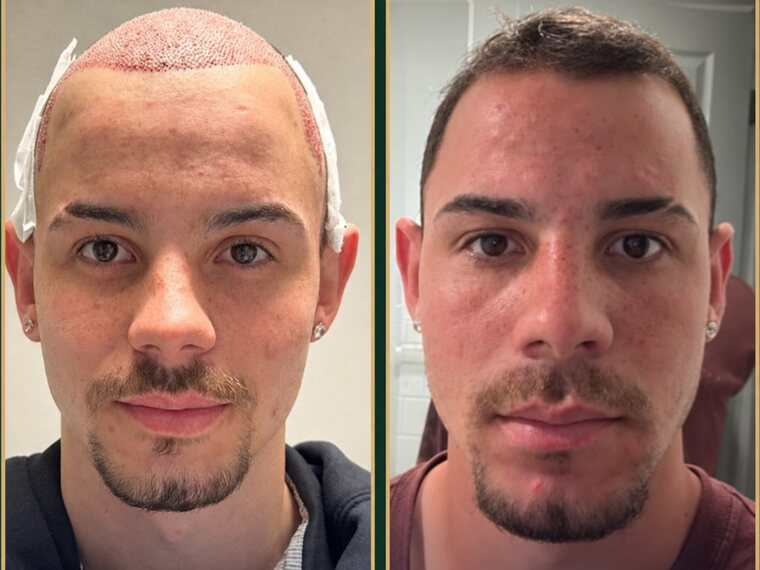
See an individual patient result
This is one patient's result, not a prediction of yours. At a consultation, ask to discuss cases relevant to your hair type, starting pattern and goals.
View more patient results →Individual outcomes vary. Images do not establish candidacy or guarantee a result.
Growth takes time
A transplant moves hair but does not stop untreated hair from continuing to thin. Follow your own surgeon's aftercare instructions. The American Academy of Dermatology says transplanted hairs commonly shed 2–8 weeks after surgery; many patients see results in 6–9 months and some take 12 months. Your timeline may differ.
Read the recovery timeline →Start with a conversation
Peak describes its New York clinic as being in Manhattan. Request a consultation to confirm the current office address, available clinician and whether your appointment will be in person or online. We will not ask you to choose a procedure before your assessment.
For a broader view of local options, see our New York clinic comparison.
Before you decide
How many grafts will I need?
The size of the thinning area, hair characteristics and safe donor supply all affect the plan. A clinician needs to assess these before giving a meaningful estimate.
Is Sapphire FUE the right choice for everyone?
No. The blade is one part of the procedure. First establish the diagnosis and whether transplantation is suitable for your situation.
Will my results look like the photos?
Before-and-after images show individual outcomes, not a promise. Ask for a plan based on your own hair and donor capacity.
Can I ask about cost during the consultation?
Yes. Ask for a written, personalized quote that explains the recommended treatment, what it includes and any aftercare. The website does not list a fixed New York transplant price.
Where is Peak’s New York clinic?
Peak describes its New York location as Manhattan. The street address is not listed here because we have not verified it; ask the team to confirm the appointment location and clinician when booking.
Can I start with an online consultation?
Peak offers online or in-person consultation options. Confirm current appointment availability when booking. An online conversation may begin the discussion, but a clinician must assess your donor area and scalp before giving a final surgical plan.
Reach the peak, on your terms
Tell us what you have noticed and what you hope to change. We will help you understand your options before you commit to treatment.
Request a free consultationMedical information source: American Academy of Dermatology, hair transplant patient guidance. The source explains general candidacy and recovery, not Peak’s individual outcomes. This page is patient education, not a personal diagnosis.