
Peak hair restoration · Insights
Donor Hair for Transplant: Complete Guide 2026
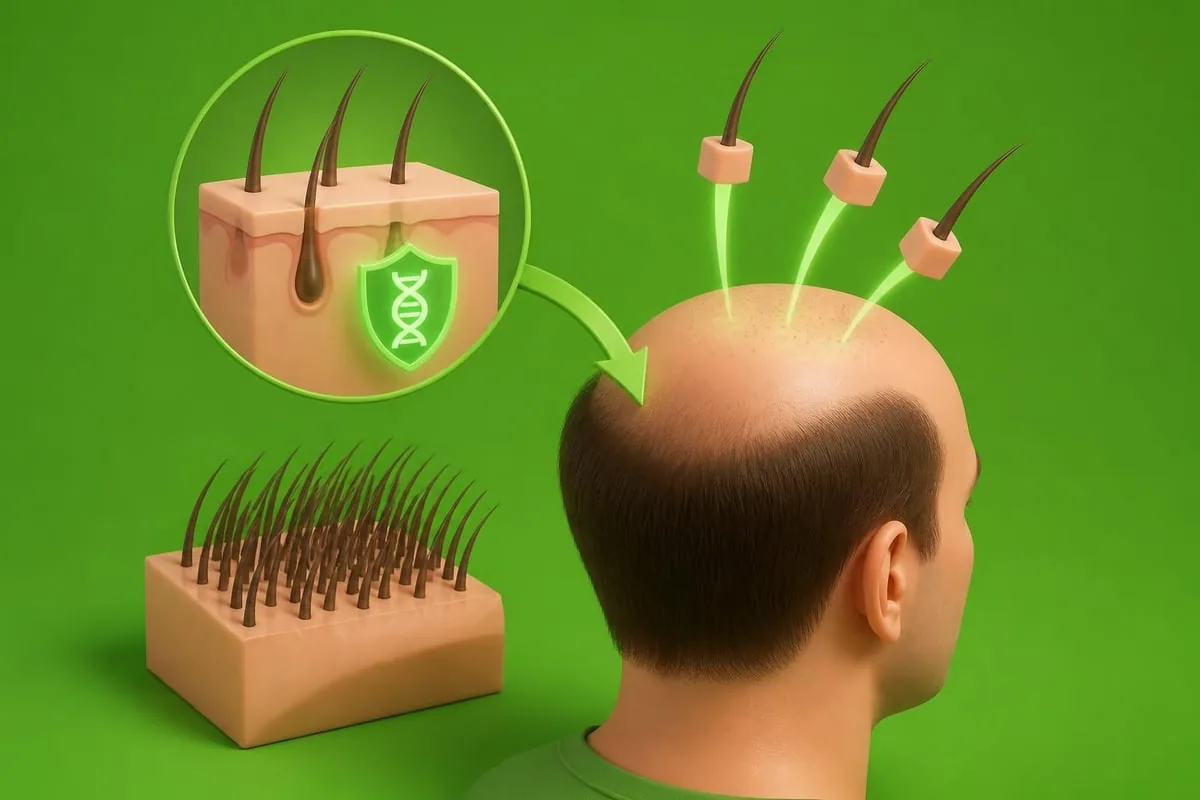
Understanding where donor hair for transplant comes from and how it behaves after relocation represents the foundation of successful hair restoration. The biological principle behind modern transplantation relies on donor dominance, meaning follicles tend to retain characteristics of their original location after relocation. This supports the potential for long-lasting restoration in suitable patients, but does not guarantee graft survival, permanent density or freedom from future hair loss. For patients considering transplantation in 2026, comprehending the donor area's anatomy, assessment criteria, and extraction techniques directly influences both immediate results and long-term satisfaction.
Understanding the Donor Area Anatomy
The donor area typically encompasses selected regions at the back and sides of the scalp. Its safe boundaries vary with the individual's hair-loss pattern, donor miniaturization and future risk; they should be mapped clinically rather than defined by a universal distance above the occipital bone. Appropriate donor follicles are generally less susceptible to dihydrotestosterone (DHT), which contributes to pattern baldness in predisposed individuals.
Potential donor regions require individual assessment:
- Occipital region (back of head)
- Selected temporal areas (sides of the scalp)
- Retroauricular zones only where assessment supports stability
- The mid-scalp should not be assumed to be a permanent donor source; it may be affected by progressive pattern loss
According to research on donor area anatomy, donor characteristics require careful assessment. Follicular density varies significantly by age and individual characteristics. Dense donor areas may provide more grafts for distribution, while sparse donor zones require conservative harvesting strategies to avoid visible depletion.
Donor Dominance and Permanent Results
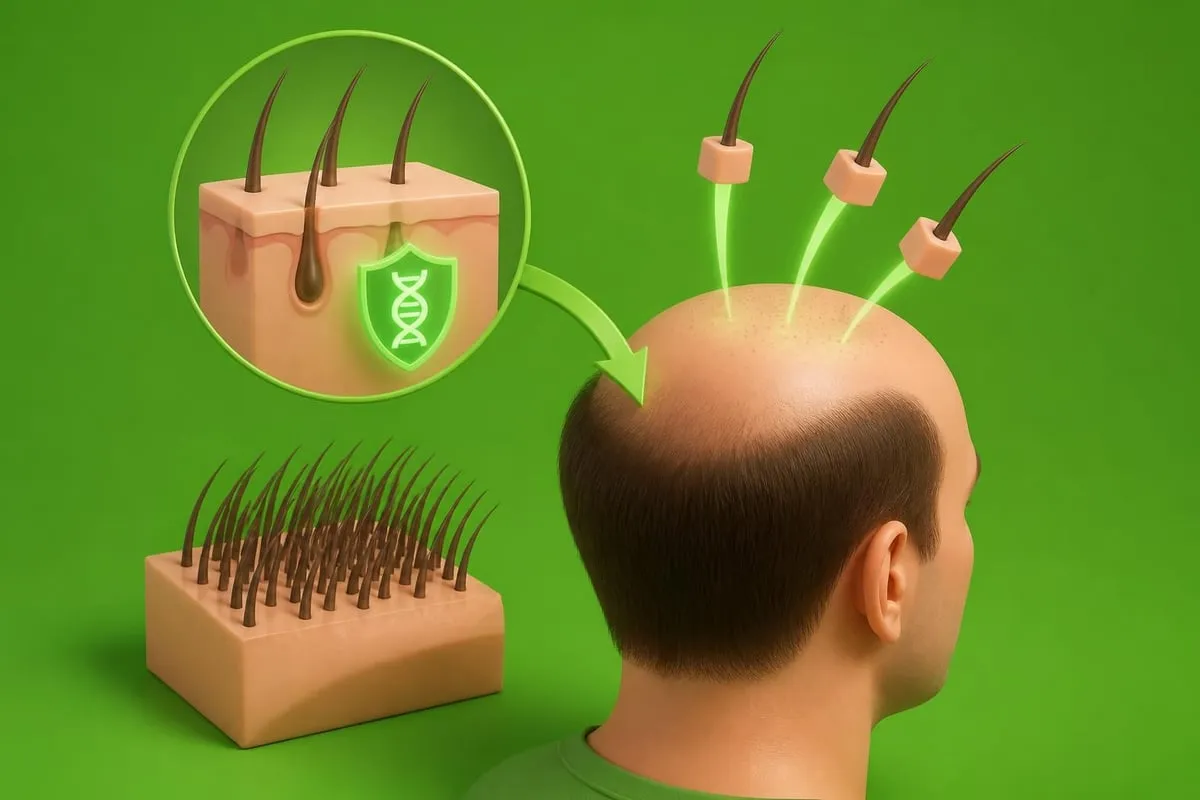
Donor hair for transplant tends to maintain characteristics after relocation. Follicles extracted from appropriately selected, relatively DHT-resistant zones can continue growing in thinning areas. This principle supports long-lasting results but does not ensure that every transplanted graft survives permanently.
Donor assessment must consider susceptibility to future miniaturization. Hair that appears stable now is not necessarily permanently resistant, and untreated native hair may continue to thin after transplantation.
Assessment and Donor Evaluation
Comprehensive evaluation determines how much donor hair for transplant a patient can safely provide without compromising aesthetic appearance. Surgeons examine multiple factors during consultation to establish realistic graft availability and long-term planning.
| Assessment Factor | Measurement Method | Clinical Significance |
|---|---|---|
| Follicular density | Automated densitometry or manual counting | Helps estimate extractable grafts |
| Hair caliber | Microscopic measurement | Affects coverage per graft |
| Scalp laxity | Manual tension testing | Influences strip harvesting feasibility |
| Donor zone extent | Anatomical mapping | Defines individualized extraction boundaries |
Density analysis requires precision because overestimating supply leads to overharvesting, while underestimating wastes potential coverage. Digital imaging systems can help calculate follicular units per square centimeter across multiple donor sites.
Calculating Donor Supply
Total donor capacity depends on an individualized extraction plan. The ISHRS information on donor harvesting emphasizes differences in hair characteristics and the need to reserve hair for possible future treatment; it does not establish a universal 25% extraction limit.
Assessment framework:
- Measure the clinically appropriate donor area
- Determine average density in follicular units per cm²
- Estimate the total follicular units within that area
- Assess an appropriate extraction pattern and remaining density individually
- Compare graft needs with the usable supply and future reserve
For example, a hypothetical donor area measuring 120 cm² with 75 follicular units per cm² contains 9,000 total units. That arithmetic does not establish how many are safe to remove. The surgeon must consider hair caliber, miniaturization, scars, extraction distribution and future loss before proposing a count.
Extraction Methods and Techniques
Modern donor hair for transplant extraction employs two primary methodologies: Follicular Unit Excision (FUE) and Follicular Unit Transplantation (FUT). Each approach offers distinct trade-offs depending on patient characteristics, restoration goals, and donor supply constraints.
Follicular Unit Excision (FUE)
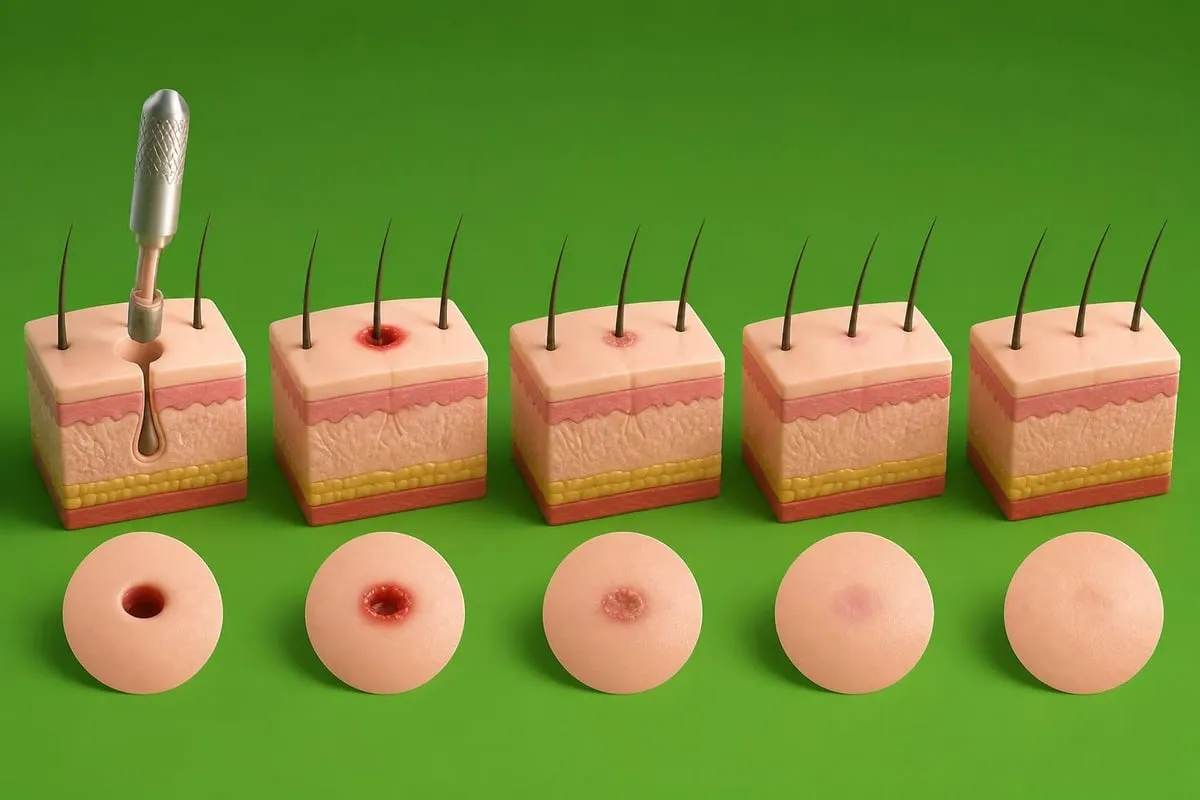
FUE techniques involve individual extraction using circular punches selected for the patient's follicles and clinical plan. Surgeons remove follicular units one at a time, leaving small wounds that heal with small scars.
FUE considerations include:
- No linear strip scar, but small extraction scars remain
- A different donor recovery pattern from strip harvesting
- Possible body hair harvesting in appropriately selected cases
- Short hairstyles may still reveal scars or donor depletion
- Individual selection of grafts within the assessed donor area
The Sapphire FUE hair transplant uses sapphire blades for recipient-site creation. The blade material alone does not establish better healing, density or graft survival than another instrument.
Follicular Unit Transplantation (FUT)
FUT harvesting removes a strip of scalp tissue from the donor region. Its dimensions depend on scalp laxity and the surgical plan. The strip is dissected into individual follicular units under magnification.
This method can be considered when planning donor utilization, but it is not universally better for graft yield or damage rates. It produces a linear scar that may be visible with shorter hair. Suitability and technique availability must be confirmed with the treating clinician.
Donor Hair Viability and Survival
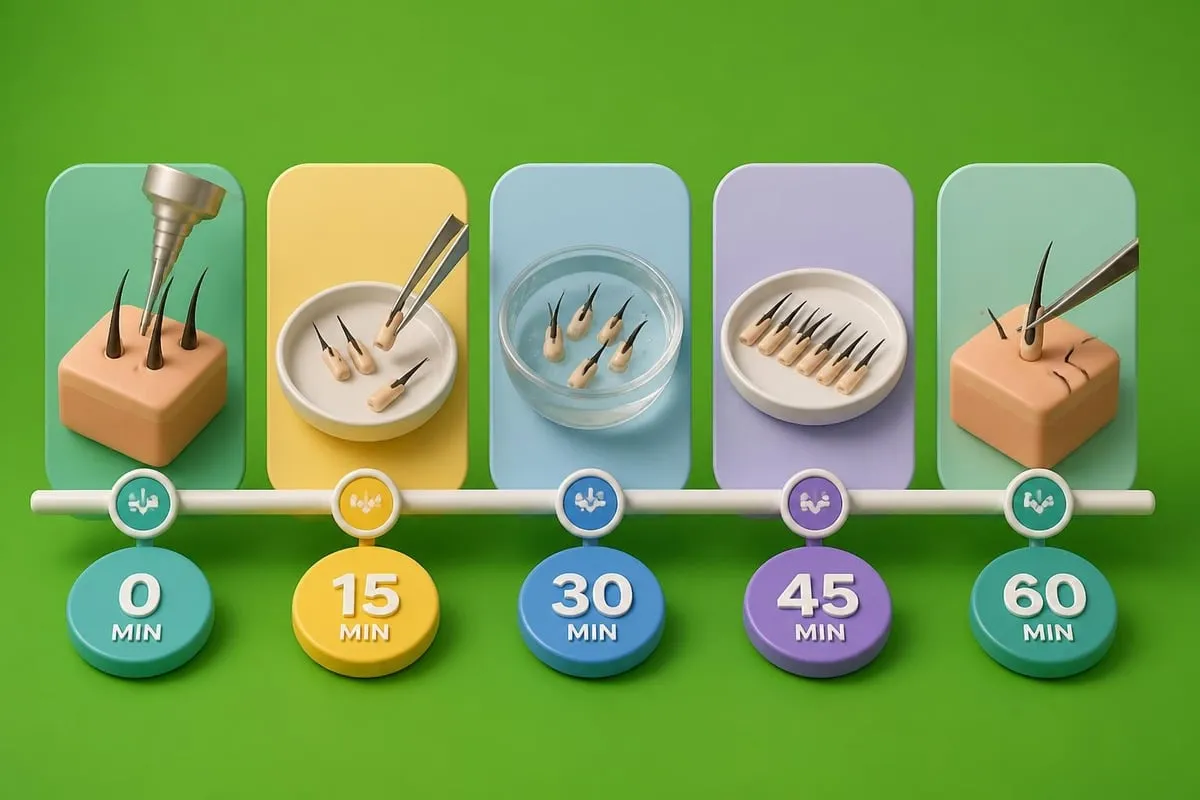
The biological factors affecting transplanted follicle survival begin the moment extraction occurs. Research on graft survival discusses factors relevant to preserving grafts. Time outside the body, handling protocols, and storage conditions deserve attention in the clinical workflow.
Graft Handling Protocols
Donor hair for transplant remains viable outside the body for limited periods. The clinical team should explain:
- Hydration: Appropriate holding solutions to protect grafts
- Temperature control: Conditions selected for the holding solution and clinical protocol, not a universal temperature assumed from a treatment label
- Minimized handling: Reduced mechanical trauma during sorting and placement
- Coordinated implantation: Minimizing avoidable delay between extraction and placement
Graft preparation teams may work alongside extraction to reduce avoidable delays. Ask who is responsible for each stage and how the treating team coordinates the process.
Expected Growth Rates
Transplanted hair can shed before regrowing. The American Academy of Dermatology describes shedding between two and eight weeks after surgery, with many patients seeing results at six to nine months and some at twelve months. The NHS describes full results at ten to eighteen months. These are general guides; individual growth and follow-up differ.
| Timeline | Growth Milestone | What the timing does not establish |
|---|---|---|
| First two weeks | Early healing and graft protection | Not a survival-rate measurement |
| Two to eight weeks | Transplanted hair may shed | Shedding alone does not establish failure |
| Following months | New growth develops gradually | No universal percentage yield |
| Six to nine months | Many patients see visible results | Not necessarily the final appearance |
| Twelve months | Some patients need this long to see results | Further review may be needed |
| Ten to eighteen months | NHS general full-results window | No guaranteed density or survival percentage |
Graft survival and final density cannot be guaranteed from a generic percentage. Discuss the treating clinician's documented results and how your own medical factors, smoking and postoperative care affect risk.
Alternative Donor Sources
When scalp donor supply proves insufficient for desired coverage, some surgeons consider body and facial hair. The 2025 ISHRS Practice Census is a source of professional practice information, not a prediction of individual suitability. Availability of non-scalp harvesting should be confirmed rather than assumed.
Beard Hair Transplantation
Beard hair may be considered as a donor source in selected cases, which is different from transplanting scalp follicles into the face for beard transplants. Beard donor hair can have a coarser texture and different growth characteristics than scalp hair.
Beard hair considerations:
- May have a thicker diameter than scalp hair
- Different growth cycles and maximum length
- May exhibit a texture mismatch
- Placement requires care, particularly near a soft frontal hairline
- Requires specialized assessment and extraction planning
Chest and Body Hair Options
Body hair may be considered when scalp supply is limited, but it is not an unlimited replacement. These follicles can differ in thickness, length and growth characteristics. Results vary based on individual body hair quality and recipient conditions; a specialist must assess suitability and explain limitations.
Peak Hair Restoration
Start with a conversation
Request a free, no-obligation consultation, or message Peak’s coordination team on WhatsApp about scheduling.
Donor Area Management and Preservation
Long-term donor conservation strategies help preserve future options. Overharvesting during initial procedures can permanently limit additional restoration possibilities, making conservative planning essential.
Preventing Donor Depletion
Strategic extraction patterns distribute harvesting within the assessed safe zone rather than concentrating in limited areas. During FUE planning, the surgeon should:
- Map extraction areas before beginning harvest
- Select spacing appropriate to density, punch size and the clinical plan
- Choose extraction depth to protect follicles rather than apply a universal depth rule
- Avoid visibly concentrated extraction patterns
- Discuss the reserve needed for possible future procedures
The NHS information on hair transplants describes potential scarring, failed growth and continuing native-hair loss. These risks belong in the planning discussion, especially when multiple sessions may be considered.
Recognizing Overharvesting
Visible donor depletion can appear as reduced density, thin patches, or moth-eaten patterns in the posterior scalp. Prevention requires individualized extraction limits and realistic expectation setting during consultation.
Changes to discuss with your surgeon include:
- Visible scalp show-through in the donor region
- Difficulty concealing extraction marks with your usual hairstyle
- A change in hair volume at the back or sides
- Visible scar-related changes following earlier procedures
- Altered tissue texture or persistent symptoms
Complications and Risk Management
Donor-site complications require attention during planning and execution. A review of FUE complications can provide context for discussion; ask your surgeon about infection, altered sensation and abnormal scarring relevant to your case.
Donor Site Scarring
FUE creates numerous small circular scars rather than a single linear scar. Their size, color and visibility vary with extraction, healing, skin characteristics and hairstyle. Even carefully performed surgery can leave visible marks; FUE is not scar-free.
Scar-risk considerations:
- Punch size selected for individual follicular characteristics
- Avoiding unnecessary tissue trauma
- Appropriate instrument condition
- Limiting repeated attempts at the same follicle
- Considering personal healing history and skin characteristics
For patients with afro-textured hair, discuss follicle curvature, personal or family history of raised scars, and pigment changes. Hair texture alone does not establish keloid risk or a need for preventive treatment.
Infection and Folliculitis
Postoperative infections require prompt clinical attention. Folliculitis may develop during healing, including around FUE extraction sites.
Prevention and management are individualized and may include appropriate preparation and prescribed medicines when indicated. Follow the treating clinician's post-operative care instructions for cleansing and graft protection. Contact the treating clinic promptly for severe pain or unexpected symptoms.
Planning Multi-Session Procedures
Patients with extensive baldness may consider multiple procedures to address their goals. Donor hair for transplant planning must account for total lifetime needs rather than optimizing single-session numbers.
Phased Restoration Strategy
A multi-year plan should:
- Agree priorities: Discuss the relative importance of the hairline, frontal zone and crown
- Reserve grafts for future progression: Preserve supply where feasible
- Schedule sessions individually: Review healing, growth and donor condition before further surgery
- Monitor native hair stability: Adjust plans based on ongoing pattern changes
- Discuss maintenance options: Consider the evidence and suitability of PRP treatments and prescribed medications, rather than assuming equal effectiveness
DHI techniques describe an implantation approach. An implanter does not create more donor hair or guarantee denser growth in later sessions.
Donor Recovery Between Sessions
Allowing adequate healing time between extractions is important, but healing does not regenerate extracted follicles. Your surgeon determines whether and when further harvesting is appropriate after reviewing donor appearance, scars and the earlier result.
The interval after strip harvesting also depends on tissue healing, laxity and the surgical plan. A calendar alone cannot establish readiness for another procedure. Rushing subsequent surgeries may compromise donor management and overall results.
Optimizing Donor Utilization
Maximizing coverage from available donor hair for transplant requires strategic graft distribution. Not all areas demand the same allocation, and understanding visual impact helps use a limited resource thoughtfully.
Graft Distribution Strategy
| Recipient Zone | Priority Discussion | Density Consideration | Individual Planning |
|---|---|---|---|
| Hairline | Shape and facial framing | A soft transition matters | No universal numerical target |
| Frontal zone | Coverage behind the hairline | Existing hair and caliber matter | Balance with remaining reserve |
| Mid-scalp | Connection between regions | Assess progressive thinning | Distribution varies by case |
| Crown | Area and swirl design | May require substantial donor allocation | Consider staging where appropriate |
The hairline can have a substantial visual impact, but the appropriate priorities differ between patients. Discuss focused restoration and broader coverage as alternatives rather than assuming every thinning region should receive equal density.
Single vs. Multi-Hair Grafts
Donor hair for transplant can yield grafts containing one to four hairs per follicular unit. Placement by hair count helps create natural transitions:
- Single-hair grafts: Often used for the leading hairline and transitions
- Two-hair grafts: May support coverage behind the leading edge
- Three-four hair grafts: May contribute volume away from the softest transitions
Sorting grafts by hair count during preparation supports a design appropriate to the individual's natural distribution.
Patient Selection and Candidacy
Not all individuals are suitable candidates for transplantation. Evaluation identifies factors relevant to likely benefit and reasons to consider an alternative approach.
Candidate Characteristics
Factors to assess include:
- The diagnosis and progression of hair loss
- Usable donor density, caliber and stability without a universal density cutoff
- Realistic expectations about achievable coverage
- General health and wound-healing capacity
- Age and likely future loss, without a universal age threshold
- Ability to follow postoperative care and attend reviews
Contraindications and Cautions
Certain conditions require careful consideration or may preclude surgery. Active scalp infections, uncontrolled bleeding disorders and unrealistic expectations should be discussed before proceeding.
Younger patients with early-stage or changing loss may be advised to consider medical management or monitoring before surgery. Consulting experienced surgeons helps clarify timing and approach.
Technology and Innovation
Robotic assistance, digital mapping and visualization systems are used in some hair restoration settings. Availability and suitability should be confirmed with the treating team. Technology does not replace diagnosis, surgical judgment or donor preservation.
Automated FUE Systems
Some platforms assist with donor mapping or extraction steps. Their capabilities depend on the system and patient characteristics. Human oversight remains essential, and automation is not evidence of a better result for every patient.
Regenerative Approaches
Stem cell therapies and platelet-rich plasma should not be assumed to improve donor healing or guarantee graft survival. Evidence, regulatory status and individual risks need separate discussion; different regenerative approaches are not interchangeable.
Follicle multiplication through laboratory culturing remains a research topic, not an established way to replenish donor follicles removed during surgery.
Cost Considerations and Value
Understanding the financial investment helps patients plan appropriately. Hair transplant costs in NYC depend on the proposed procedure and the services included.
Clinics may use per-graft models or session fees. Request a current written quote rather than treating an unsourced range as Peak's pricing. Total investment can depend on:
- The proposed graft plan
- Technique and procedure complexity
- The treating clinical team
- Geographic location
- Facility arrangements and follow-up services
While Turkey has become known for affordable procedures, patients should compare travel logistics, follow-up access and the specific clinical arrangements when considering international options.
Successful hair restoration depends on preserving donor supply through careful assessment, conservative harvesting and long-term planning. Understanding the biological principles and technical options helps patients make informed decisions. Peak Hair Restoration coordinates consultations in Midtown Manhattan; licensed clinicians at the treating medical practice assess individual suitability and make treatment decisions. Outcomes vary and are not guaranteed.